

How to Enable Earthquake and Emergency Alerts on Your Phone
Contents
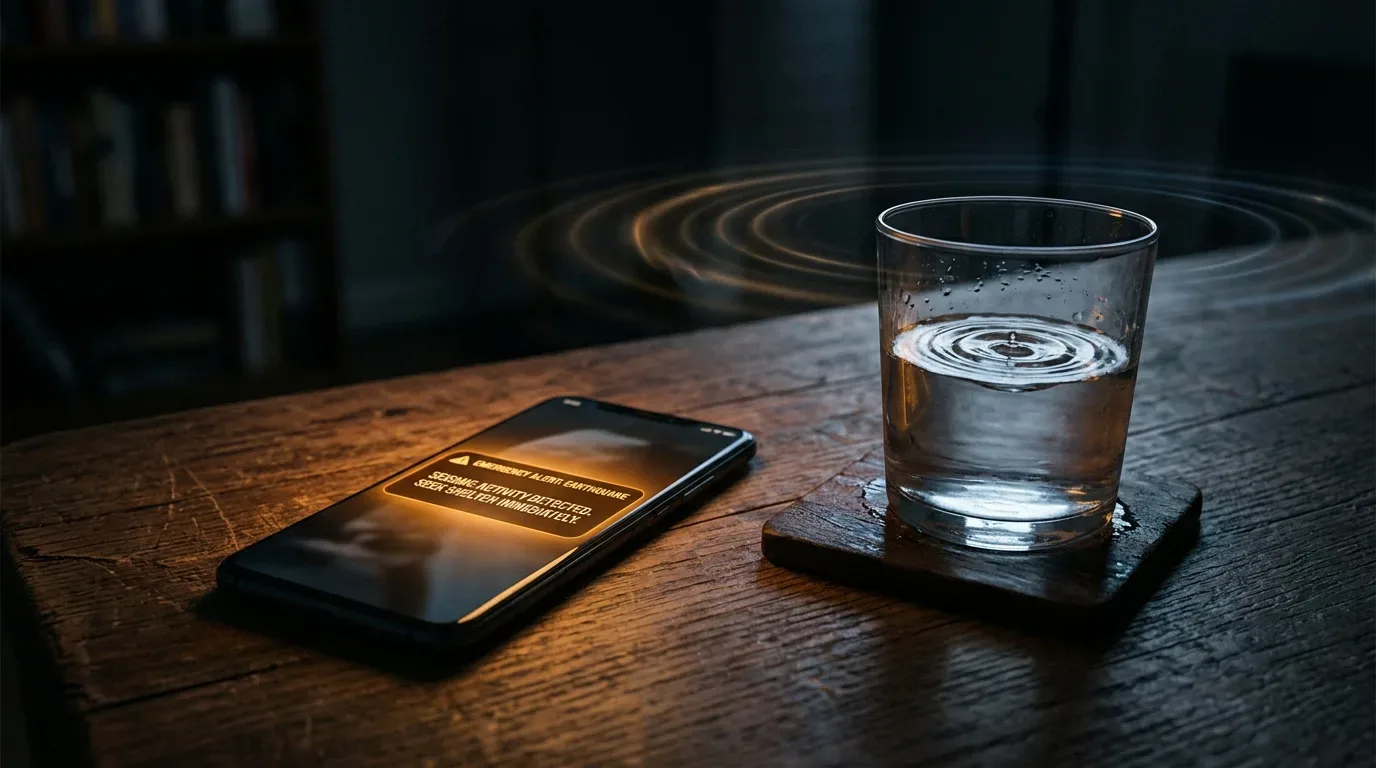
Smartphones can detect seismic waves and send warnings seconds before shaking reaches your area. Those few seconds give you time to drop, cover, and hold on. Here is how to make sure these alerts are turned on for Android and iPhone.
How to Turn On Earthquake Alerts on Android
Google Earthquake Alerts uses phone accelerometers to spot initial shockwaves. To turn the feature on:
- Open Settings on your phone.
- Search for Earthquake alerts and tap the result. You can also go to Settings > Safety & Emergency > Earthquake Alerts (or Settings > Location > Advanced > Earthquake Alerts on some models).
- Turn on the Earthquake Alerts toggle.
Your phone needs to run Android 9 or newer, with location services and an active internet connection (Wi-Fi or cellular data) left on.
How to Enable Emergency Alerts on iPhone
On iOS, emergency notices rely on local government alert systems. To verify your settings:
- Open Settings on your iPhone and tap Notifications.
- Scroll all the way down to the Government Alerts section.
- Make sure Critical Alerts and Emergency Alerts are toggled on.
- If your region and iOS version support it, look under Enhanced Alerts and enable Earthquake Alerts.
Note: Apple's built-in earthquake warnings are not available in every country. In areas without direct support, devices rely on standard government alert broadcasts instead.
Settings to Double-Check
For warnings to reach your phone on time, check these options:
- Location Accuracy: Keep high-accuracy location tracking active so the system knows your distance from the epicenter.
- Internet Connection: Early warning data needs an active cellular or Wi-Fi connection.
- Battery Optimization: Aggressive power-saving modes can sleep background tasks, which may delay emergency signals.
Why an Alert Might Not Arrive
Even with alerts enabled, your phone will not ring for every tremor. If you are very close to the epicenter, the ground waves travel faster than the network can send the data, a delay known as the blind zone. Tremors below the system's magnitude threshold also skip the audible alarm.
Related posts
How to Fix the 'You Need the Official WhatsApp' Error
Fix the 'You need the official WhatsApp to use this account' error by removing modded APKs, fixing Play Integrity issues, or reinstalling the app.

How to Block Unwanted Pop-Up Ads on Your Phone
Stop full-screen pop-up ads and browser spam on your phone. Steps to revoke Chrome permissions, remove hidden adware apps, and test in Safe Mode.

How to Turn Off 5G on iPhone, Samsung & Xiaomi
Step-by-step instructions to turn off 5G and switch to 4G or LTE on iPhone, Samsung, and Xiaomi phones, plus carrier opt-out codes.