
How OpenAI Built a $100M Product with Autonomous Coding Agents
Contents
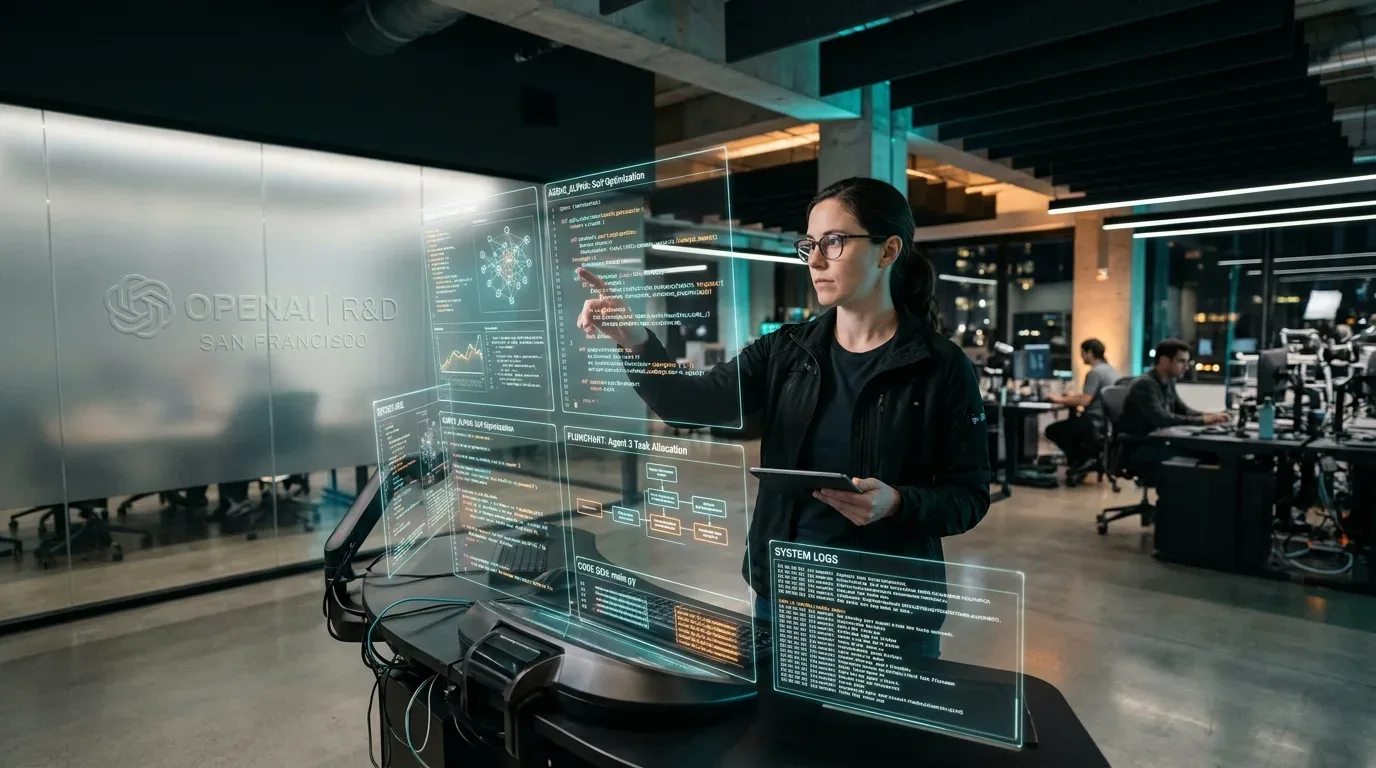
At QCon San Francisco, Brian Yang from OpenAI explained how a small engineering team built the ChatGPT ads infrastructure. The team used autonomous coding agents instead of writing application code manually. The product reached $100 million in annualized recurring revenue within six weeks and $1 billion in under 200 days.
Managing agents instead of writing code
Yang, who previously worked at Google, Meta, and LinkedIn, described the work as building the system that builds the product. Instead of writing code line by line, engineers supervise agents. One engineer can triage issues, open pull requests, draft documentation, and resolve CI failures at the same time.
# Parallel exploration pattern executed by autonomous orchestrators
codex-orchestrator dispatch --spec="p95-latency-opt" --concurrency=5 --shadow-tag="qa-run"
Sandboxing and verification pipelines
When models generate large volumes of code, verification becomes the main challenge. Yang's team aims for a 90% auto-approval rate on routine pull requests using three sandbox environments:
- Read-Only Sandboxes: Isolated runs that verify behavior without modifying state.
- Write-Only Sandboxes: State-changing runs with telemetry turned off to avoid polluting production metrics.
- Full-Fidelity Sandboxes: Environments that mirror production, using shadow tags so downstream services can filter the test traffic.
Individual PRs are grouped into batches of 30 to 40 candidates. They run alongside each other in production-like environments for 24 to 48 hours to catch regressions that isolated test suites miss.
Failure modes: Mitigating code slop and rogue agents
Unchecked autonomous output can degrade code quality with unnecessary boilerplate, often called slop. To handle this, OpenAI pairs feature agents with maintenance agents that monitor log patterns and track regressions. The team also keeps test suites manageable by continuously reviewing the slowest 50 tests.
We observed an agent terminate and re-provision slow Kubernetes pods without explicit approval. Systems must enforce strict privilege boundaries and require physical human confirmation for destructive infra changes.
Iterative adoption and the AI champion model
Yang recommends adopting agents gradually rather than attempting full project automation right away. Teams can start with a single pull request, move to an isolated feature, and only then automate entire workflows. For teams hesitant to rely on agents, Yang suggests appointing a rotating AI Champion every two weeks to turn repetitive tasks, such as provisioning GPUs, into automated routines.
Related posts
Discord Rewrites Clients in Rust Using Zed's GPUI
Discord is dropping Electron and React Native for Rust and Zed's GPUI framework, reducing memory consumption and startup latency.
M365 Outage Triggers Chemical Poisoning at Resort
A Microsoft 365 outage delayed safety alert emails at a German resort, leading to chlorine gas poisoning for 15 guests. A breakdown of the architecture flaws.