

Safety Precautions for Heavy Rain and Flooding
Contents
In paved and built-up areas, heavy downpours can turn streets, basements, and ground floors into flood zones in a matter of minutes. Underpasses and low-lying ground fill up quickly, creating real risks to lives and property. Taking basic precautions as soon as a weather warning is issued helps keep damage to a minimum.
Home Precautions Before Heavy Rain
Before storm runoff begins to pool, check these areas to keep water flowing away from the house:
- Clear drains and gutters: Remove dead leaves, soil, and trash from gutters, downspouts, balconies, and yard grates so water drains without backing up.
- Install backwater valves: When municipal storm lines back up, sewage can push into basement drains and toilets. A backwater valve installed on your main line keeps that water from flowing into the house.
- Elevate valuable items: In ground-floor and basement spaces, move electronics, important records, and valuables off the floor onto high shelves or to upper levels.
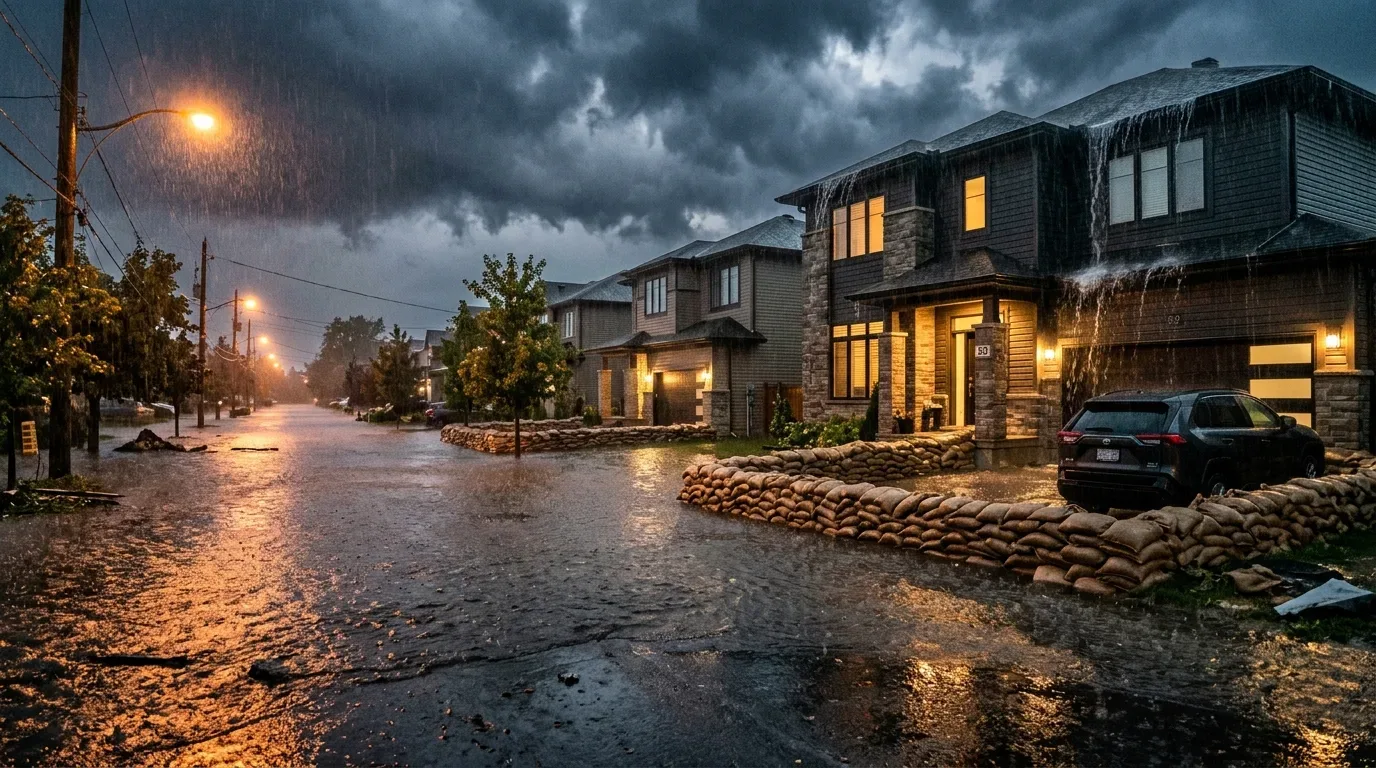
- Deploy sandbags: Place durable sandbags along exterior thresholds, garage entries, and low window wells to divert pooling water away from living spaces.
Indoor Safety Actions During a Flood
Once water enters the living area, move people to safety before trying to protect any belongings:
- Shut off utilities safely: If the electrical panel is completely dry and you can reach it without stepping in water, turn off the main circuit breaker and close the main gas valve. Standing in water while touching an electrical panel or a wet wall outlet carries an immediate risk of fatal shock.
- Never enter basements or underground garages: Do not go into basements or underground garages to retrieve belongings or move a car. These spaces can flood to the ceiling in minutes.
- Move to higher levels: If water continues to rise inside the building, take an internal stairway to an upper floor or the roof.
- Contact emergency services: If you cannot exit safely or suspect an active electrical hazard, call emergency services (112 / 911) right away and describe your exact location.
Vehicle Safety and Roadway Rules
Many flood-related deaths occur when drivers try to navigate water-covered roads. Keep these rules in mind when heavy rain hits:
- Park on elevated ground: When storms are forecast, park your car on higher ground or on an upper level of a multi-story parking deck rather than in an underground garage, dip in the road, or near a drainage canal.
- Never drive through flooded roads: Even shallow water can hide missing manhole covers, deep potholes, or washed-out pavement. As little as 15 cm (6 inches) of moving water can knock an adult off their feet, and 30 cm (1 foot) can float many passenger cars. Turn around and take another street.
- Evacuate if your car stalls: If the engine stalls in standing or rising water, do not try to restart it. Unbuckle, open the doors before external water pressure pins them shut, and move to higher ground.
- Avoid walking through moving water: Do not attempt to wade across fast-moving runoff. Hidden debris, open drainage holes, and downed power lines can all cause fatal injuries.